JL ACADEMY | CONSULTANCY & ORGANISATIONAL DEVELOPMENT
Reducing Restrictive Practice
Safer practice takes more than training alone.
Safer practice is built through prevention, leadership, reflective learning and culture, not only through physical intervention skills.
JL Academy supports organisations to reduce restrictive practice through strategic consultancy, workforce development and evidence-informed improvement.
Where physical intervention training is required, it should sit within a wider approach that prioritises prevention, safety, dignity and professional accountability.
01 | WHY REDUCTION MATTERS
Reducing restriction means changing practice, not just teaching technique.
Many organisations have invested heavily in physical intervention training while giving less attention to the conditions that create repeated risk, distress and unsafe responses in the first place.
Reducing restrictive practice requires a broader strategy. It means understanding culture, staff confidence, communication, leadership, incident patterns and the lived realities of the people being supported.
Training has an important role, but training on its own is not enough. Sustainable change happens when learning is connected to prevention, reflective practice and organisational improvement.
A prevention-led approach
Understand the context
Examine the factors contributing to distress, risk and restrictive responses, including individual needs, environmental conditions and organisational systems.
Prioritise prevention
Strengthen early responses, communication, positive behaviour support and approaches that reduce the likelihood of restrictive interventions being needed.
Learn and improve
Connect staff experience, incident review, leadership and reflective learning to practical changes in everyday support.
02 | TRAINING WITHIN STRATEGY
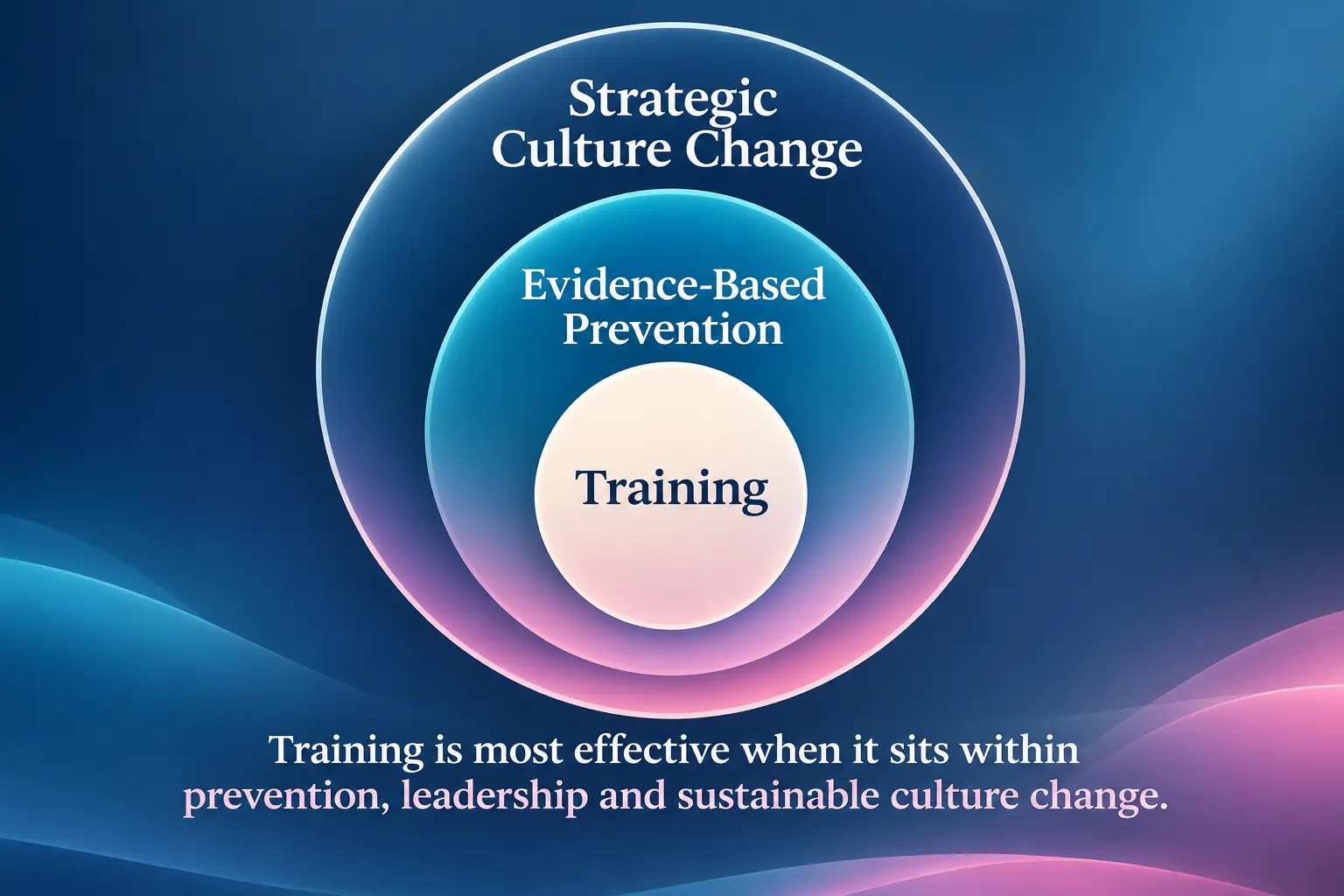
Training should sit inside a wider prevention framework.
Where physical intervention training is required, it should be delivered in the proper context. The aim is not simply to teach response techniques, but to reduce the circumstances in which restrictive interventions are needed at all.
A reduction strategy is strongest when training is supported by evidence-based prevention, psychologically safer teams, reflective leadership and a clear organisational commitment to reducing restriction.
What this means in practice
Assess before prescribing
Understand organisational risk, individual needs and existing practice before deciding what training or development is required.
Prevention before intervention
Prioritise early recognition, communication, environmental adjustments and preventive approaches. Physical skills should be positioned as a last resort rather than a first response.
Connect training with culture
Ensure that staff understand why restrictive practice reduction matters, and that training is supported by leadership, policy, governance and organisational values.
Measure meaningful improvement
Look beyond training attendance to evaluate changes in practice, incident patterns, restrictive intervention use and the experience of people receiving support.
03 | CULTURE & PSYCHOLOGICAL SAFETY
Safer practice depends on the culture around it.
Restrictive practice reduction cannot be separated from staff experience.
If people do not feel safe to speak up, question decisions, admit mistakes or reflect honestly on difficult situations, improvement becomes harder to sustain.
Psychological safety can support stronger teamwork, more open learning after incidents and constructive conversations about established practice.
For this reason, reducing restrictive practice is closely connected to leadership behaviour, supervision, debriefing and the wider quality of workplace culture.
Psychological Safety
Explore how leadership, inclusion, accountability and constructive challenge influence whether staff feel able to speak up and contribute to improvement.
JL Academy provides psychological safety training, leadership development and organisational support.
Debriefing & Reflective Practice
Reflective learning helps organisations understand what happens in practice, including the influence of human factors, systems and working conditions.
Our programmes support constructive, blameless reflection, appropriate accountability and organisational learning.
04 | HOW JLA CAN HELP
Consultancy and development support shaped around your organisation.
JL Academy can support organisations at different stages of their restrictive practice reduction journey, from early review through to more structured improvement work.
Our approach brings together relevant expertise in leadership, prevention, training development, reflective practice, quality assurance and organisational improvement.
Baseline Review
Reviewing current practice, policies, incidents, organisational concerns and the wider context in which restrictive interventions occur.
Training Needs Analysis
Identifying the knowledge, skills and development actually required before recommending a training solution.
Workforce Development
Supporting staff capability in prevention, communication, positive behaviour support, reflective practice and safer responses.
Leadership Support
Helping leaders strengthen consistency, communication, learning culture, governance and professional accountability.
Reflective Practice & Debriefing
Supporting approaches that encourage learning after incidents and difficult experiences, while recognising human factors and the needs of those involved.
Improvement Planning
Translating organisational findings into realistic, evidence-informed actions, priorities and review arrangements.
STANDARDS & GOOD PRACTICE
Where BILD ACT and the Restraint Reduction Network fit.
JL Academy also provides independent consultancy to organisations seeking support with BILD ACT certification requirements and the Restraint Reduction Network Training Standards.
This includes training programme review, governance, documentation, certification readiness and the wider organisational arrangements that support safer practice.
Physical intervention training should sit within a broader prevention-led approach, rather than being treated as the whole solution to reducing restriction.
WHO WE WORK WITH
Support for organisations seeking safer, more thoughtful practice.
Our consultancy and development work may be relevant to health and social care providers, education settings, specialist services, public sector organisations and others seeking to reduce restrictive practice while strengthening safety, dignity and workforce capability.
Whether you are reviewing current approaches, responding to concerns or looking to build a stronger long-term strategy, JL Academy can help you think beyond training alone.
START THE CONVERSATION
Looking at reducing restrictive practice in your organisation?
Speak to JL Academy about consultancy, workforce development and evidence-informed support that connects training with prevention, leadership and culture change.